AWS just launched CloudWatch Application Signals, and your team is trying to figure out whether this replaces Datadog or supplements it. You are paying Datadog $23 per host per month (or more) and AWS is offering built-in APM that integrates natively with your infrastructure. The answer depends on what you are monitoring, how deeply you need to see into it, and whether your team has the bandwidth to manage another AWS service.
What CloudWatch Application Signals Actually Does
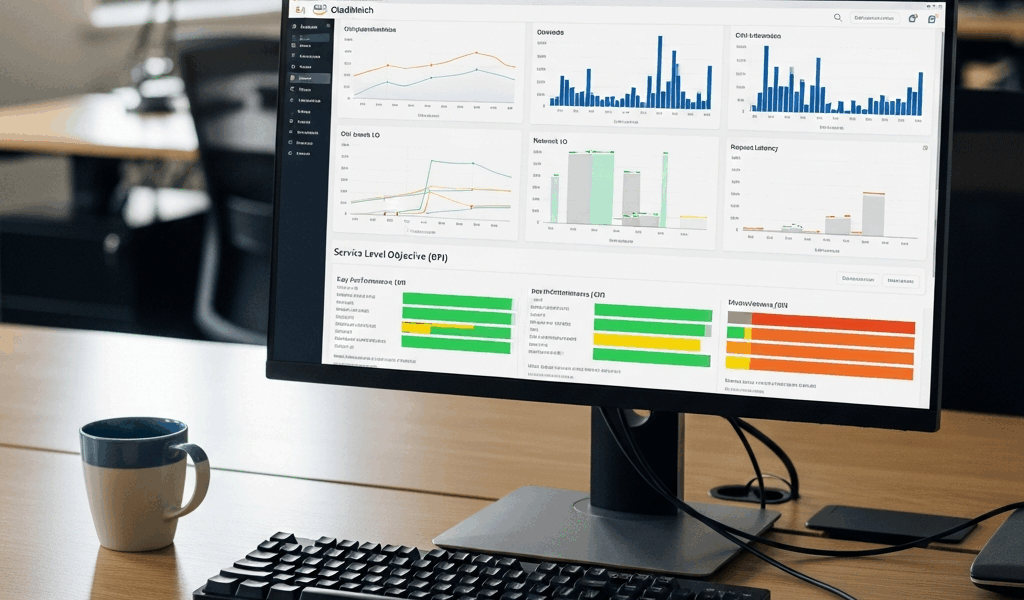
Application Signals is AWS’s answer to the APM (Application Performance Monitoring) market. It auto-instruments your applications running on ECS, EKS, and EC2 to collect traces, metrics, and logs without requiring code changes. It surfaces request latency, error rates, and throughput as Service Level Objectives (SLOs) in the CloudWatch console, giving you a single dashboard for application health.
The integration is the selling point. Application Signals connects directly to CloudWatch Metrics, CloudWatch Logs, X-Ray traces, and Service Map — all within the AWS console you are already using. If your entire stack is AWS-native, the telemetry flows without external agents, third-party APIs, or data egress costs. The auto-instrumentation supports Java, Python, and .NET applications with OpenTelemetry-based collection.
The SLO feature is genuinely useful. You define latency and availability targets (p99 latency under 200ms, availability above 99.9%), and Application Signals tracks your error budget in real time. When you are burning through your error budget faster than expected, CloudWatch alarms trigger before you breach your SLO. This is table stakes in Datadog but relatively new in the AWS-native monitoring stack.
Where Datadog Still Wins
Datadog’s advantage is breadth and depth across heterogeneous environments. If you run workloads across AWS, GCP, Azure, on-premises, or hybrid — Datadog provides a single pane of glass across all of them. Application Signals is AWS-only. If your infrastructure touches anything outside AWS, you still need Datadog (or a similar multi-cloud APM) for unified visibility.
The Datadog agent collects 600+ integrations out of the box — databases, message queues, container runtimes, CI/CD pipelines, third-party SaaS tools. Application Signals integrates with AWS services natively but lacks the breadth of third-party integrations. If your stack includes Redis, MongoDB, Kafka, or services outside the AWS ecosystem, Datadog’s integration library is substantially richer.
Dashboarding and visualization in Datadog is significantly more mature. Custom dashboards, team-specific views, anomaly detection overlays, and correlation features have years of development behind them. CloudWatch dashboards have improved but still feel utilitarian compared to Datadog’s visualization toolkit. For teams that rely heavily on dashboards for incident response, Datadog’s interface is faster to build in and easier to navigate during an outage.
Log management in Datadog includes live tail, pattern clustering, log pipelines with parsing and enrichment, and anomaly detection on log patterns. CloudWatch Logs Insights is powerful for querying but lacks the real-time streaming and pattern detection features that make Datadog’s log management a genuine investigation tool during incidents.
Where Application Signals Wins
Cost is the most immediate advantage. Datadog’s per-host pricing at the Infrastructure Pro tier ($23/host/month) plus APM ($40/host/month for APM Pro) adds up fast — a 50-host environment with APM runs $3,150 per month before log ingestion costs. Application Signals pricing is consumption-based through CloudWatch, and for AWS-native workloads, the telemetry data stays within the AWS ecosystem without egress charges. For many workloads, the cost difference is 40 to 60% lower with Application Signals.
No agent management. Datadog requires installing and maintaining the dd-agent across every host, container, and function. Application Signals uses the AWS Distro for OpenTelemetry (ADOT) collector, which is managed as a sidecar or daemonset in ECS/EKS. Less infrastructure to manage, fewer agent updates to roll, fewer compatibility issues when upgrading operating systems or container runtimes.
Native IAM integration means no separate API keys, no third-party credential management, and security teams do not need to approve an external agent with broad system access. For organizations with strict security requirements — FedRAMP, HIPAA, SOC 2 — keeping telemetry within the AWS trust boundary simplifies compliance significantly.
Auto-instrumentation with zero code changes is genuinely zero-touch for supported runtimes. Deploy the ADOT collector, enable Application Signals, and traces appear. Datadog’s auto-instrumentation also works well, but Application Signals’ integration with X-Ray means trace data correlates with AWS service metrics (Lambda cold starts, DynamoDB throttling, SQS queue depth) without additional configuration.
The Decision Framework
Use Application Signals if: your infrastructure is 90%+ AWS-native. You run on ECS, EKS, or EC2 and your data stores are RDS, DynamoDB, and ElastiCache. Your team already lives in the AWS console. Cost reduction from Datadog is a priority. You have straightforward SLO requirements and standard APM needs (latency, error rates, throughput). Security and compliance benefit from keeping all telemetry within the AWS boundary.
Use Datadog if: you operate across multiple clouds or hybrid infrastructure. You need 600+ integrations with third-party services. Your team depends on advanced dashboarding, anomaly detection, and log pattern analysis during incidents. You have invested heavily in Datadog dashboards, monitors, and runbooks that would be costly to recreate. You need mobile app monitoring, RUM (Real User Monitoring), or synthetic monitoring — features Application Signals does not cover.
Use both if: you want Application Signals for core AWS infrastructure monitoring (cost savings) and Datadog for the multi-cloud, third-party integration, and advanced analytics layer. This is becoming a common pattern — Application Signals handles the AWS-native telemetry cheaply while Datadog provides the cross-platform visibility and investigation tools. The overlap costs less than running Datadog APM across every host.



Stay in the loop
Get the latest team aws updates delivered to your inbox.